What Google judges
Marketing was my weak spot, so AI writes the pages on my 27 websites. Then I checked what Google did with them.
The clearest answer, whoever wrote it
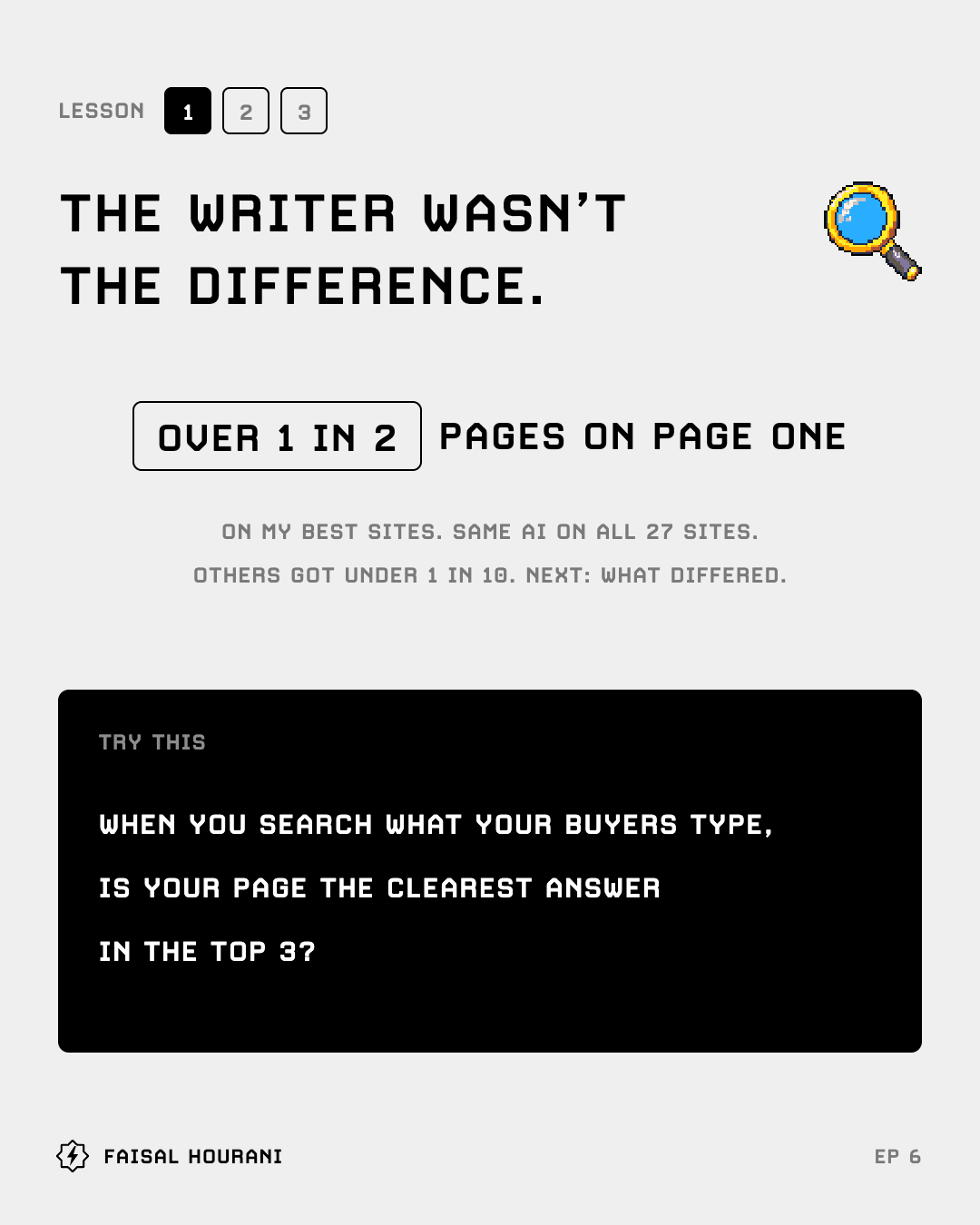
Google wrote it down in 2023: it rewards “high-quality content, however it is produced”, and “appropriate use of AI or automation is not against our guidelines” (Google Search Central). The writer was the same on every one of my sites, and the results still ranged from over half to under 1 in 10. So what decided it was the page, not who wrote it.
Try this, if it fits: when you search what your buyers type, is your page the clearest answer in the top 3?
A table and your sources
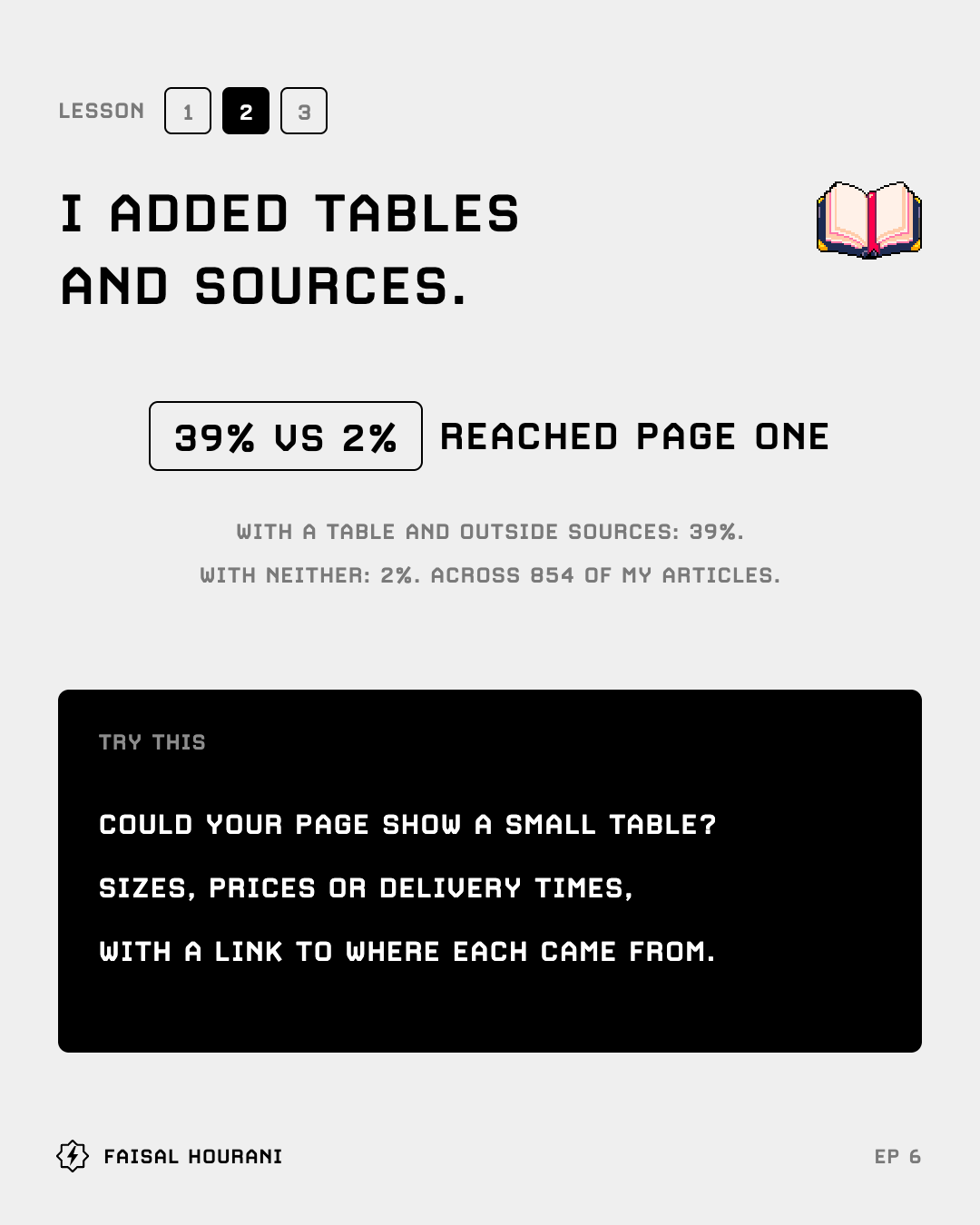
A table gives a buyer something to compare. A source lets them check you. Google asks whether a page gives “original information” and says that of experience, expertise, authority and trust, “trust is most important” (Google). This is a pattern in my pages, not proof of the cause: pages with tables also tended to answer more.
Try this, if it fits: could your page show a small table, with a link to where each number came from?
The next question, answered too
Length isn’t the goal. Google says it has no preferred word count. It asks whether a page gives “a substantial, complete, or comprehensive description of the topic”. My longer pages did better because they answered more of what a buyer asks next: how long, how much, which one, what if.
Try this, if it fits: what would your buyer ask next, after reading your page? Is that answer there too?
After you publish
Most of my clicks came later, and from a few pages.
A few months before you judge
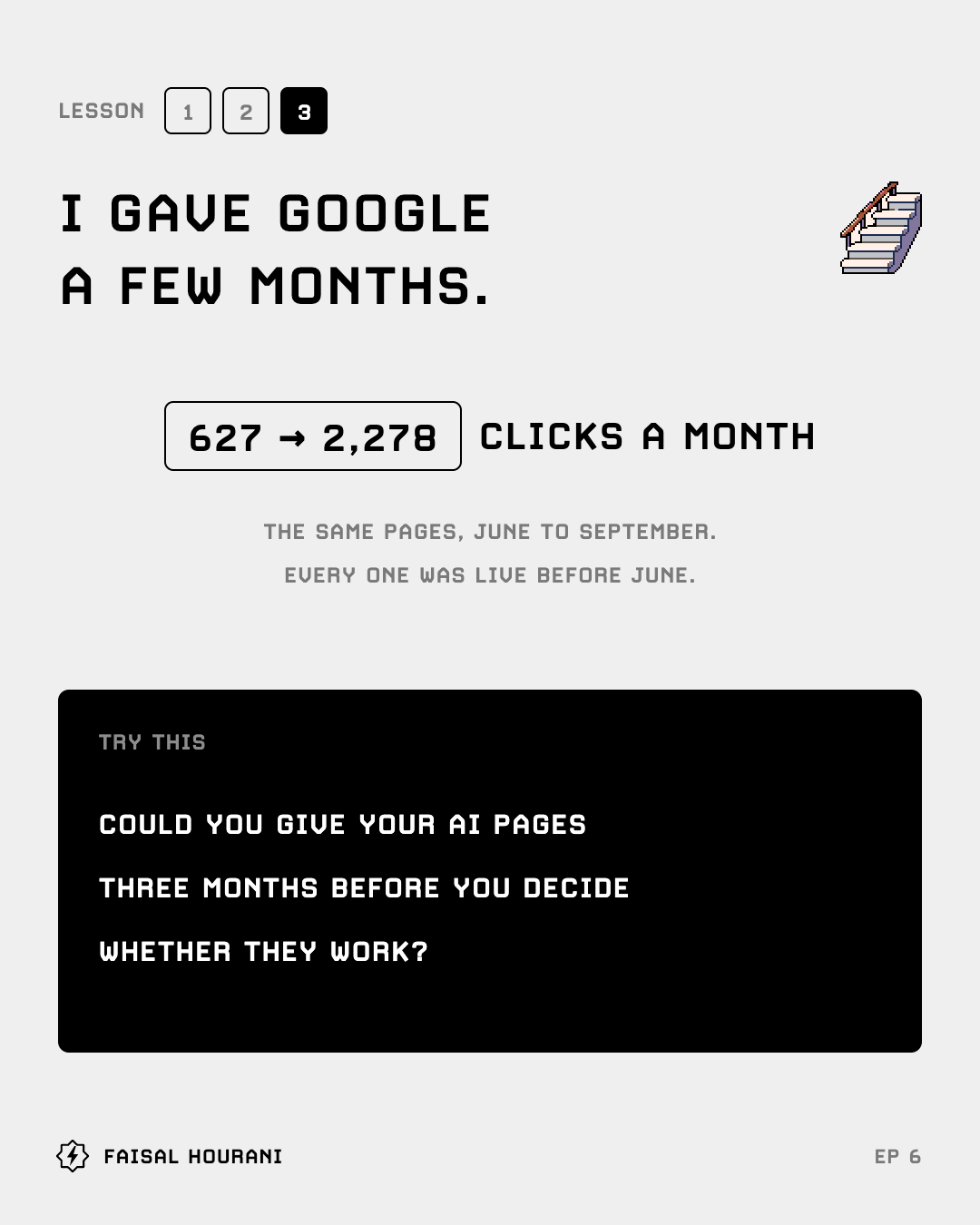
A new page can take weeks to settle, and a new site takes longer. If you judge AI pages after a month, you judge them too early. My clicks from Google grew every month from June to September. For how fast single pages can move, see how to get on the first page of Google.
Try this, if it fits: could you give your AI pages three months before you decide whether they work?
Pages on page one, not pages written
What Google does punish is “scaled content abuse”: “using generative AI tools or other similar tools to generate many pages without adding value for users” (Google’s spam policies). More pages didn’t mean more clicks for me. A page on page one did. If two of your pages answer the same question, one better page usually beats two.
Try this, if it fits: how many of your pages are on page one? Search Console shows it for free (Pages, sorted by position).
Learn from your best page
A few pages do most of the work. They show you what Google and buyers want from your site: the kind of question, the depth, the table. Want this run for your store every week? It’s what my AI SEO team does for online brands.
Try this, if it fits: which page brings you the most visits? What does it do that the others don’t? Could your next page do the same?


