A quiz funnel that gets the email.
A quiz funnel asks for the email last, not first: a few one-tap questions, then the email, once the answer is ready. On my quiz, 7 in 10 people who started gave their email. The average quiz gets 4 in 10.
Visitors from Google, ChatGPT and links; anyone who came from an ad is left out. The average quiz turns 40.1% of starters into sign-ups (Interact). Pulled October 2026.
Build the quiz
A quiz is 8 easy taps, then the email. Each rule below has its number from my own quiz.
Pick the one choice your buyers struggle with
A quiz funnel works when it answers one question your buyer already has, like “which machine is right for me?” Each result is a real product or collection, and three or four results are enough.
Try this, if it fits: which one choice do your buyers struggle with most?
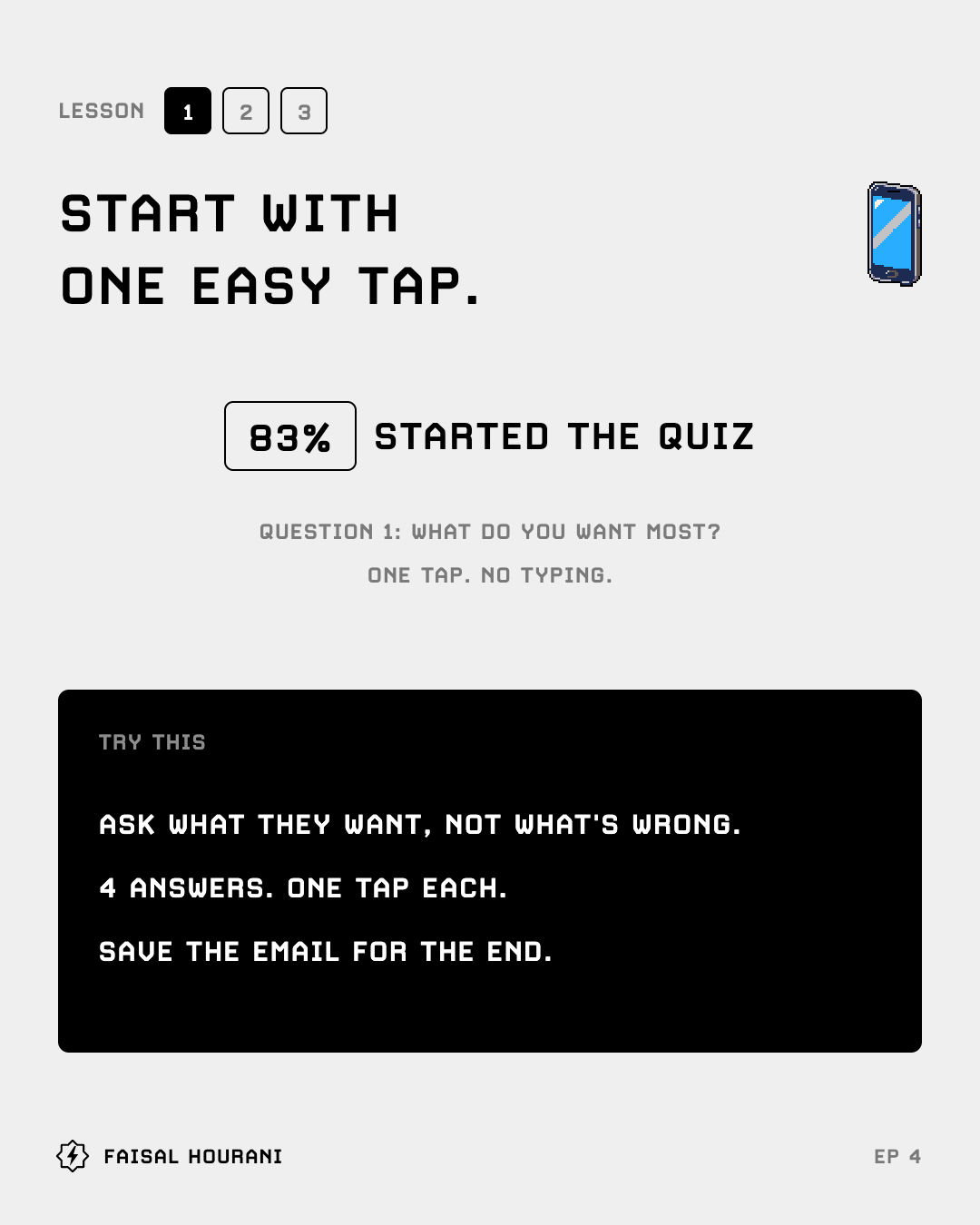
Start with one easy tap
Ask what they want, not what’s wrong. Four answers, one tap, no typing, and no email yet. “What do you want most?” is easy to answer and feels good to answer.
Try this, if it fits: could your first question be one tap about what your buyer wants?
Make 8 taps feel short
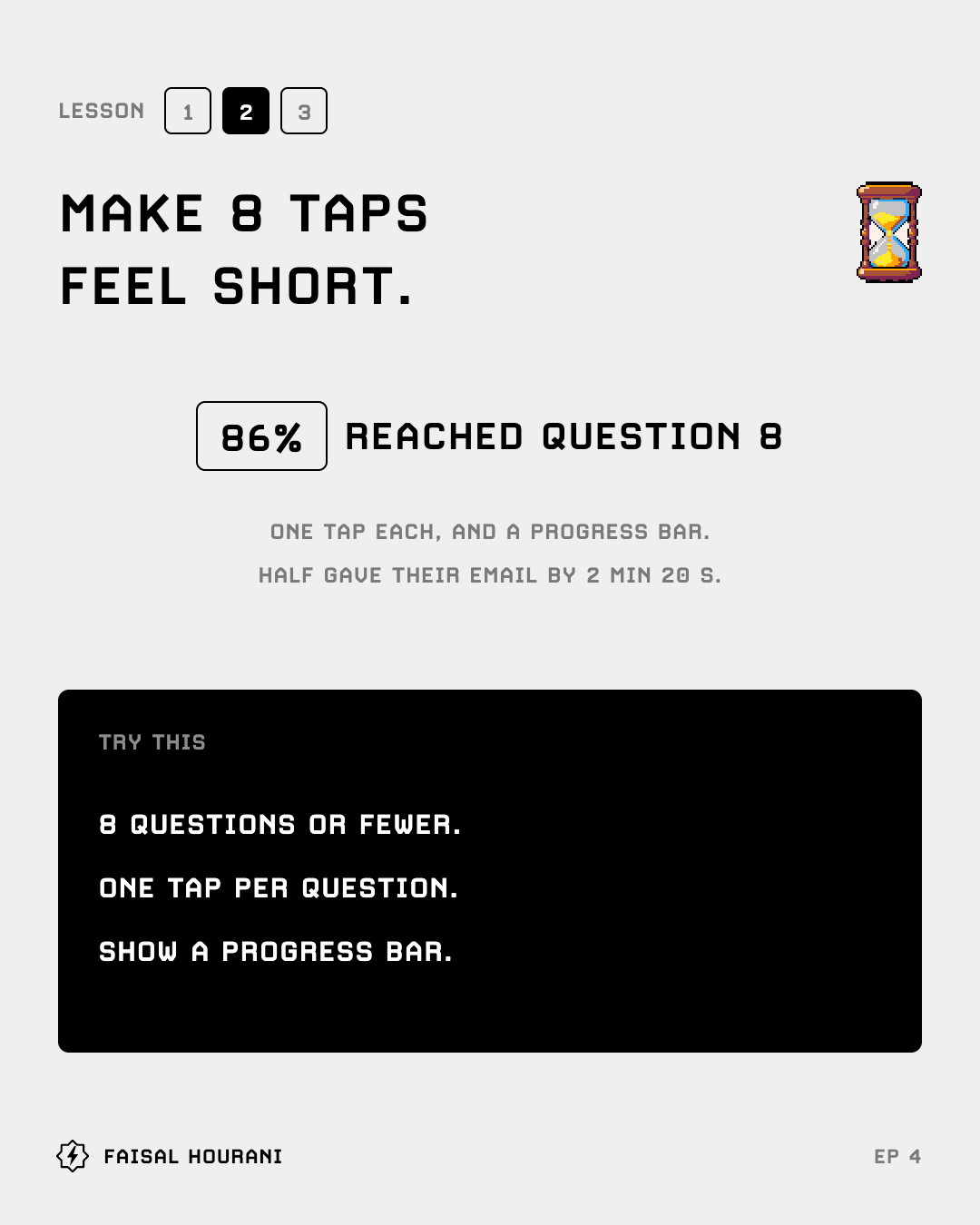
Eight questions is plenty. Give each one a single tap and show a progress bar, so people can see the end. Call it a match, not a test. After the first answer, show why the result is worth waiting for: real numbers, not a promise.
Try this, if it fits: could yours fit in 8 questions or fewer, one tap each?
Ask for the email last
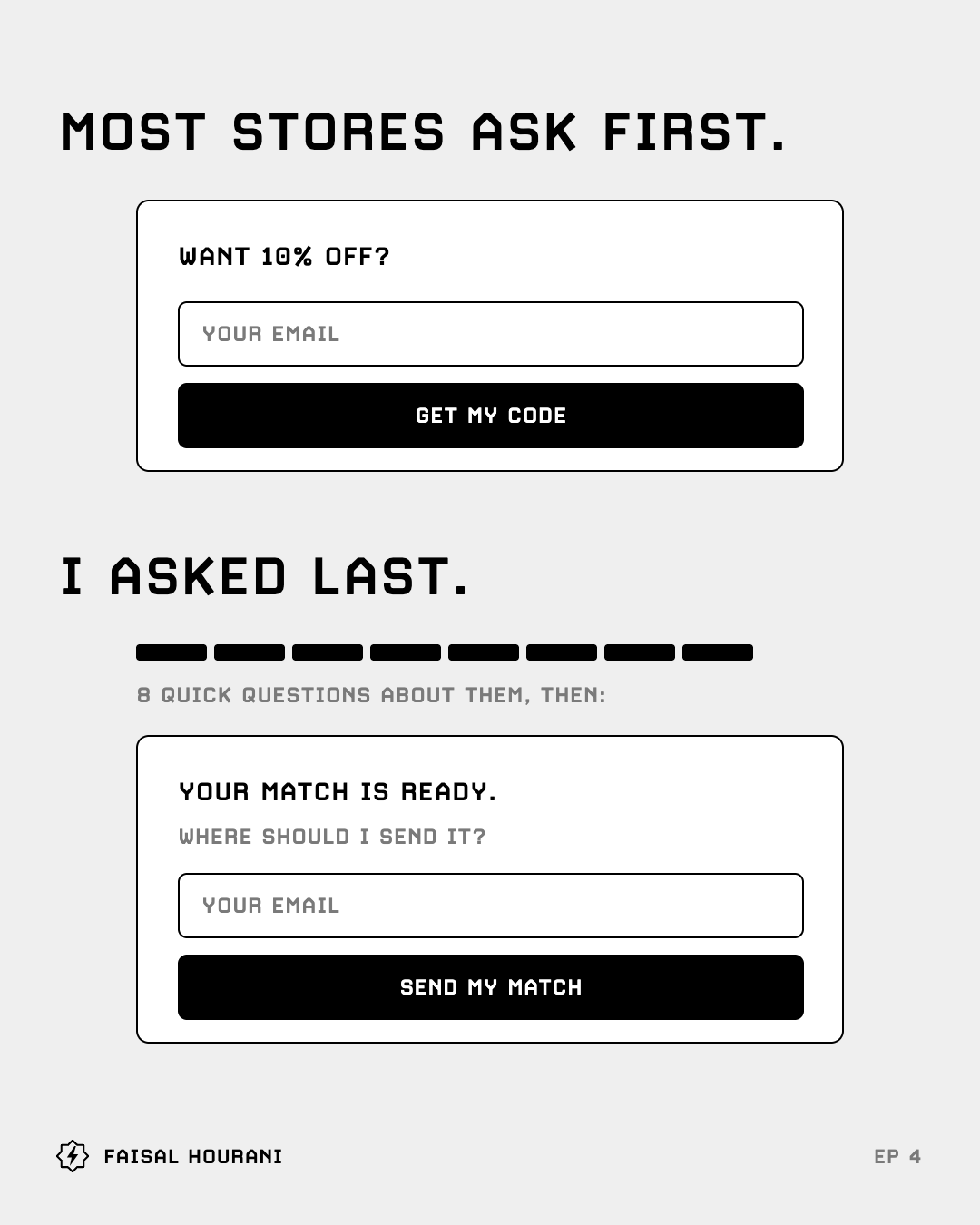
Most stores ask for the email first, in a popup with a discount. A quiz asks last, when the result is ready and the bar is almost full. By then the email feels like the last step, not a toll. Let “just looking” answers skip the email and get a free guide instead.
Try this, if it fits: where does your email ask sit now? Could it move to the moment the result is ready?
Make it pay
A quiz only works when people find it, and when the result leads to a product.
Put the quiz where people read
Visitors from Google and ChatGPT land on your articles and product guides, not your homepage. Put a small “find your match” box near the top of your 3 most-read pages, right where the question comes up (see how to rank in ChatGPT).
Try this, if it fits: which are your 3 most-read pages, and which product question does each one raise?
Make the result name the problem, then one product
Read 2 of their answers back to them, name their problem, give one fix for free, then recommend one product, not five. It reads like advice from someone who listened, so the product feels like the next step. What worked after that first buy is in how to sell digital products.
Try this, if it fits: could your result name one product instead of five?
Save the answers with the email
Save each answer as a tag in your email tool. Then write one first email for each result, so it talks about their match instead of your newsletter. If AI writes them, a few emails you love make a good start: how to keep a swipe file for AI.
Try this, if it fits: which 2 answers would make your first email feel written for them?
Want this built and tested for your store? See the AI marketing team I run for online brands.
Six quizzes to copy.
Each one starts with an easy tap and ends with the email. Swap in your own products.
“What do you want most from your morning coffee?”
Find your brewing setup
Results: a quick all-purpose kettle, a pour-over kettle, a grinder upgrade.
“What do you want your skin to feel like?”
Find your routine
Results: three routines by skin type, each with its first product.
“What matters most for your dog?”
Find your dog’s food
Results: foods by age, size and appetite.
“What do you run for?”
Find your shoe
Results: road, trail and race shoes by how you run.
“How do you want your tea to make you feel?”
Find your tea
Results: calm, focus or treat, each with one tea to start.
“How do you like to travel?”
Find your bag
Results: carry-on, weekender and backpack, by trip length.
Want all 7 steps planned for your store in 3 minutes? The free quiz maker at the end of this page writes your results, your 8 questions, your email screen and the first email for each result.
What people ask.
What is a quiz funnel?
A few one-tap questions that match a visitor to a result, then ask for their email to send it, then recommend one product. It replaces a sign-up box that asks for the email first.
How many questions should a quiz have?
About 8, one tap each, with a progress bar. On my quiz, 86% of the people who started reached question 8.
When should a quiz ask for the email?
Last, when the result is ready. 91% of the people who reached my email screen gave their email.
What questions should a quiz funnel ask?
Start with what they want most, one tap. Then 5 or 6 questions that sort people into your results, one about what stopped them before, and last, how soon they want to start. Save the email for after the last one.
Should I offer a discount for the email?
You don’t have to. My quiz offered none: the result was the reason to give an email, and 91% of the people who reached the email screen said yes.
Do I need quiz software?
Any quiz app or form tool with “if this answer, go to that question” logic works, and some are free. Shopify stores can use a quiz app from the Shopify app store. Write the quiz first; the tool matters less.
Does a quiz funnel work without ads?
Yes. All the numbers in this guide come from visitors who found my sites on Google, ChatGPT and links. More than half of the people who opened the quiz gave their email.

Your store's quiz, planned.
Paste one prompt into your AI. Get a quiz that picks the right product for each visitor and asks for the email last.
- One prompt for ChatGPT, Claude or Gemini. Just add your website.
- The one choice your buyers struggle with before they buy.
- 3 or 4 results, each a real product from your store.
- 8 one-tap questions, starting with the easiest one.
- The email screen, for when their result is ready.
- Where to put the quiz, and the first email for each result.

Who would this help?
If a friend runs a store or a site, it takes one tap to send it straight to them.
More guides.
Each guide teaches one thing I learned while building.

How to build your brand, your first video and your website with AI.

How to reach Google's page one faster.
How to rank in ChatGPT and get cited.

Lead magnet ideas that work.

How to sell digital products.

Does Google penalize AI content?
Is ChatGPT accurate?
How to keep a swipe file for AI.
How to use ChatGPT for SEO.
How I make a LinkedIn carousel with AI.
How to check Google ranking for free.