Is ChatGPT accurate?
Not always. My AI agents run on OpenAI's GPT models, the family behind ChatGPT, and a second AI checking their work sent back nearly 1 in 5 pieces. Most mistakes weren't wild inventions. They were things left out, or claims that went a step past the source. Here's how I catch them.
From my agents’ work log, 5 September to 12 October 2026. Most of the work was research: reading other businesses’ ads and pages and writing up what they sell and who buys. A second AI or an automatic check looked at every piece before I used it; I read 60 of the mistakes one by one. News answers from AI assistants had at least one significant issue 45% of the time in a study of 3,000+ answers by 22 public broadcasters (EBU and BBC, October 2025).
What AI gets wrong
AI does most of my research now. I can't check it all myself, so a second AI checks every piece against its source.
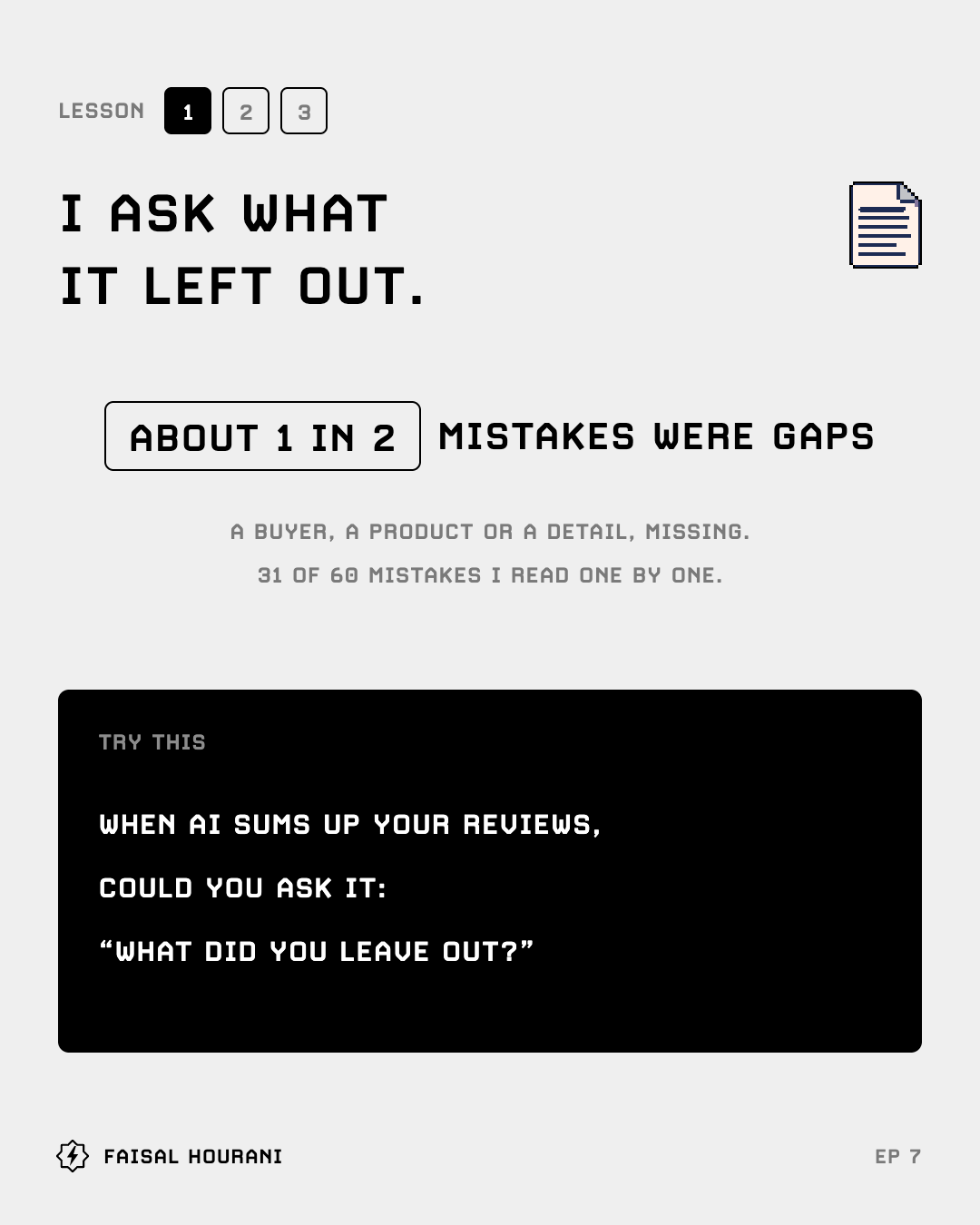
Ask what it left out
A wrong fact stands out. A missing one doesn’t, because nothing on the page looks off. When AI sums up your reviews, a supplier’s sheet or a competitor’s page, the most common slip in my work was leaving something out, not making something up.
Try this, if it fits: when AI sums up your reviews, could you ask it “What did you leave out?”
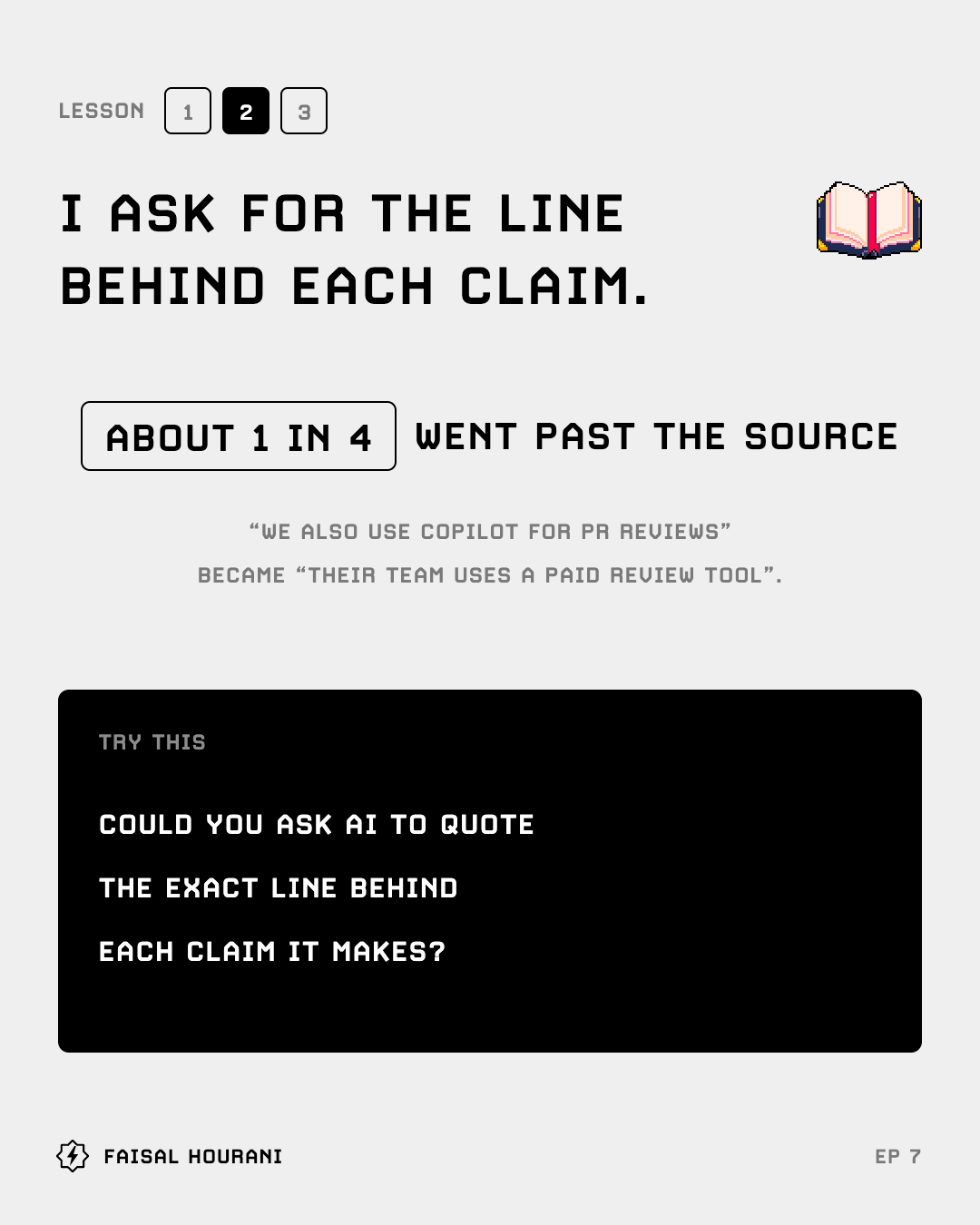
Ask for the line behind each claim
The slip is usually small: one step past what the source says. “Uses a tool” becomes “pays for a tool”. In a test on a coffee store’s product page, “sourced from” two producers became “grown by” them. Each sounds right, which is why it gets through. Asking for the exact line turns a feeling into a check.
Try this, if it fits: could you ask AI to quote the exact line behind each claim it makes?
Check every number
Numbers carry the most weight and are the easiest to check: either the source has it or it doesn’t. A made-up number in a report, a product page or an ad is the mistake a customer is most likely to catch.
Try this, if it fits: could you ask AI where each number came from, before it goes on your page?
Fixing it fast
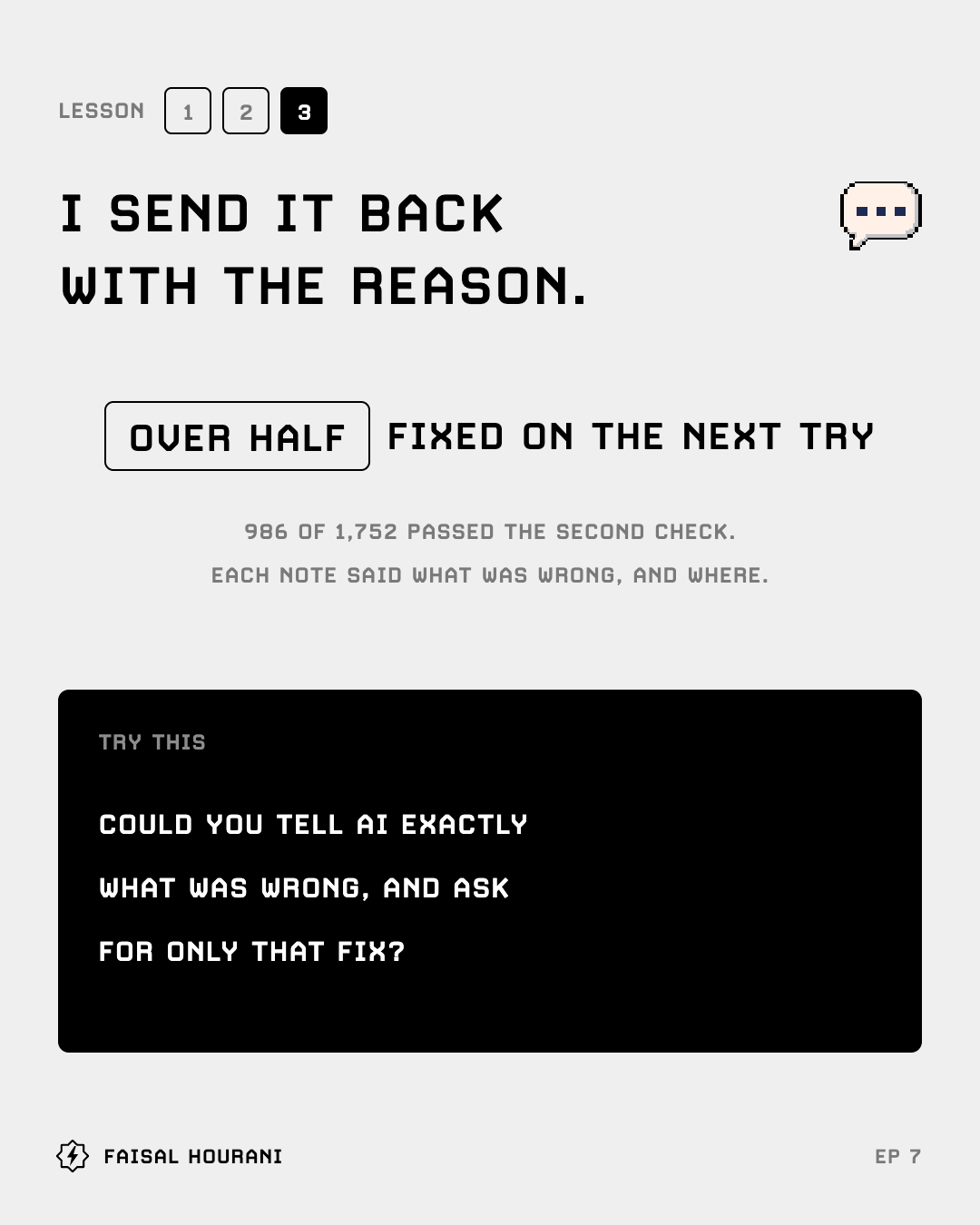
Over half the mistakes were fixed on the very next try.
Send it back with the reason
“Try again” gets you a new answer with new mistakes. A note that names the problem gets the fix. Keeping everything else the same also stops the AI from breaking a part that was fine.
Try this, if it fits: could you tell AI exactly what was wrong, and ask for only that fix?
Double-check who it's for
What a business sells is usually written plainly on its page. Who buys it often isn’t, so AI fills the gap with a guess that sounds reasonable. If you use AI to research competitors or your own market, that’s the line to check first.
Try this, if it fits: when AI says who a competitor sells to, could you ask for the line that says so?
Test your checker with a wrong answer
A checker that passes everything looks the same as one that works. The only way to tell is to hand it something you know is wrong. Even my working checker missed some: 12 of the 60 mistakes I read had already got past one check, and a second look caught them.
Try this, if it fits: could you give your checker a wrong answer on purpose, and see if it notices?
Want these checks run for you? The free AI double-checker at the end of this page takes what your AI wrote and what it was based on, and lists what’s missing, what goes past the source and every number without one, with a fix note to paste back.
What people ask.
Is ChatGPT accurate?
Often, but not always. My agents run on OpenAI’s GPT models, the family behind ChatGPT, and a second AI sent back 1,752 of 9,616 pieces of their work: nearly 1 in 5. Over half of those were fixed on the next try. So it’s accurate enough to do the work, and not accurate enough to skip the check.
What kind of mistakes does AI make?
In the 60 mistakes I read one by one: 31 left something out, 16 said more than the source showed, 8 mixed up where a fact came from, and 5 didn’t follow the instructions. Made-up facts happen, but small leaps past the source were far more common.
Which AI is most accurate?
It changes with every model update, so I don’t pick on brand. In the 2025 broadcasters’ study of news answers, all four assistants they tested had issues, and Gemini had the most. The check matters more than the brand: whatever you use, ask for the line behind each claim.
Can AI check its own work?
What works for me is a separate check with the source in front of it, told to quote the line behind each claim. Then I test that checker with wrong answers, because mine once passed an empty page, and even the working one missed 12 of the 60 mistakes I read until a second look.
Why does AI make things up?
It writes what sounds likely. When the source is thin, likely and true can drift apart: “uses a tool” turns into “pays for a tool”. That’s why the line behind each claim is the check that catches most of it.
Should I stop using AI for research, then?
I didn’t. 7,864 of 9,616 pieces passed the first time, and over half of the rest were fixed on the next try. It just doesn’t go out unchecked.

Your AI's work, double-checked.
Paste what your AI wrote and what it was based on. See what it left out, what goes past the source, and the fix to send back.
- One prompt for ChatGPT, Claude or Gemini.
- What your AI left out, with the source line for each.
- Every claim that goes past the source, next to the line it should have come from.
- Every number, matched to its source, or flagged.
- A fix note to paste back to your AI.

Who would this help?
If a friend runs a store or a site, it takes one tap to send it straight to them.
More guides.
Each guide teaches one thing I learned while building.
How to build your brand, your first video and your website with AI.

How to reach Google's page one faster.

How to rank in ChatGPT and get cited.

Lead magnet ideas that work.
A quiz funnel that gets the email.

How to sell digital products.
